What If Your Laptop Could Keep Up with Your Wanderlust?
Remember that moment when you’re stranded in a café with spotty Wi-Fi, desperately trying to send an urgent file before boarding your flight? I’ve been there—frustrated, stressed, and wondering why technology that promises freedom so often feels like a chain. But over years of working from mountain cabins, beach towns, and airport lounges, I’ve discovered a few quiet game-changers. This isn’t about fancy gadgets—it’s about tools that quietly adapt to your life, so you can move freely without sacrificing productivity or peace. It’s not about being digital nomad perfect. It’s about showing up for your work, your family, and yourself—no matter where you are.
The Myth of “Working from Anywhere” — Why It Often Falls Short
Let’s be honest: the dream of working from anywhere sounds beautiful—typing under palm trees, sipping coffee in Parisian cafés, joining meetings from a train through the Alps. But the reality? More like squinting at a screen in a noisy hostel common room, trying to mute yourself before your roommate starts snoring during a client call. I used to believe that if I just had the right laptop or a better headset, everything would fall into place. But the truth is, most of our tools weren’t designed for real life on the move. They assume stable internet, quiet spaces, and predictable routines. And when those things disappear, so does our sense of control.
I remember one evening in Lisbon, sitting cross-legged on a hostel bed, my video frozen mid-sentence during a check-in with my team. My daughter was back home, waiting for our nightly call, and I missed it—because the Wi-Fi dropped just as I clicked join. That moment hit me harder than any technical glitch should. It wasn’t just about work; it was about connection. And I realized then that technology should be helping me stay close to the people and priorities I care about, not pulling me away. The fantasy of seamless remote work often ignores the emotional toll of constant adaptation—the guilt, the exhaustion, the feeling of always being half-present. We need tools that don’t just function, but support us emotionally and mentally, too.
So what changed? I stopped chasing the dream and started paying attention to the day-to-day. Instead of asking, “Can I work from anywhere?” I began asking, “Can my tools keep up with my life?” That small shift made all the difference. Because the goal isn’t to be everywhere at once. It’s to feel grounded, capable, and connected—no matter where you open your laptop.
Picking Tools That Disappear Into Your Day
Here’s a secret I’ve learned after years of trial and error: the best technology doesn’t impress you. It just works. It doesn’t demand attention or require a 20-minute tutorial. It’s the kind of tool that fades into the background—like a favorite pair of jeans that fit so well you forget you’re wearing them. I used to be drawn to apps with flashy features, endless customization, and glowing reviews. But the more complex they were, the more energy they drained from me. I’d spend more time organizing my to-do list than actually doing anything. Sound familiar?
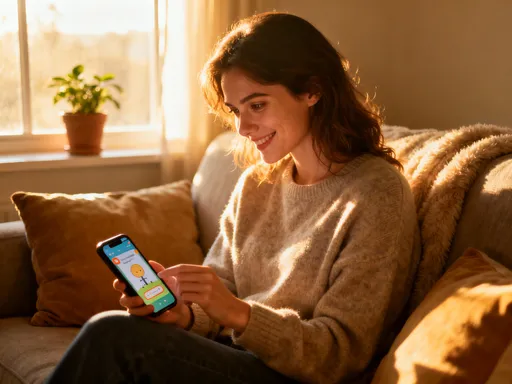
Then I started asking a different question: Does this tool make my life easier—or just busier? That’s when I discovered the power of simplicity. Take note-taking, for example. I switched from a powerful but clunky app to one that automatically syncs across devices and lets me jot down thoughts in seconds. Now, if an idea strikes while I’m walking through a market in Marrakech, I don’t need perfect formatting—I just open the app, speak into my phone, and move on. Later, it’s there, transcribed and ready. No stress. No friction. The tool didn’t change my brain—it just stopped getting in the way.
Another game-changer? Voice-to-text apps that work offline. I used to panic if I lost connection, worried I’d lose my thoughts. Now, I record voice memos while hiking or commuting, knowing the words will appear in my notes once I’m back online. It’s like having a silent assistant who remembers everything for me. These tools don’t replace my effort—they protect it. They free up mental space so I can focus on what really matters: my work, my family, my sense of calm. And that’s the real win. Because when technology disappears into the rhythm of your day, you’re no longer managing apps—you’re living your life.
How One Calendar Saved My Sanity Across 12 Time Zones
Let me tell you about the year I traveled through 12 countries and completely lost track of time—literally. I’d wake up in Barcelona, join a meeting scheduled for “9 a.m.” back home in Chicago, only to realize it was actually 8 p.m. there. I missed my niece’s birthday call. I double-booked interviews. I started dreading my own schedule. Time zones weren’t just a nuisance—they were eroding my relationships and my confidence. I felt like I was failing at something that was supposed to be easy with modern tools. But here’s the thing: most calendars don’t understand your life. They just show blocks of time. What I needed wasn’t more reminders—it was a calendar that understood me.
Then I found one that did. It wasn’t the fanciest app, but it was smart in all the right ways. It learned when I usually worked, when I needed breaks, and even how much travel time I needed between meetings. When someone in Sydney wanted to schedule a call, it didn’t just show available slots—it highlighted the ones that wouldn’t cut into my family dinner or morning walk. It even suggested “focus blocks” based on my past behavior. Over time, it started feeling less like a tool and more like a thoughtful assistant who knew my rhythm.
The real magic? It helped me protect my energy. Instead of constantly negotiating time across continents, I could say yes with confidence—knowing I wouldn’t be burning out or missing what mattered. I started blocking “me time” like I would any important meeting. And when my daughter called to ask if I could read her a bedtime story over video, I could check my calendar and say, “Yes, sweetie, I’ve got you at 7:30 your time.” That kind of reliability didn’t just make me more productive—it made me feel like a better mom, a better friend, a better version of myself. Your calendar shouldn’t just track time. It should honor it.
The Offline-First Mindset: Working When the World Disconnects
Here’s a truth we don’t talk about enough: the world isn’t always online. Planes, trains, rural villages, even some city subways—they all come with gaps in connectivity. And if your workflow depends on constant internet access, those gaps can feel like roadblocks. I used to treat airplane mode like a productivity death sentence. No Wi-Fi meant no work, no communication, no progress. But over time, I realized I had it backward. The problem wasn’t the lack of connection—it was my dependence on it.
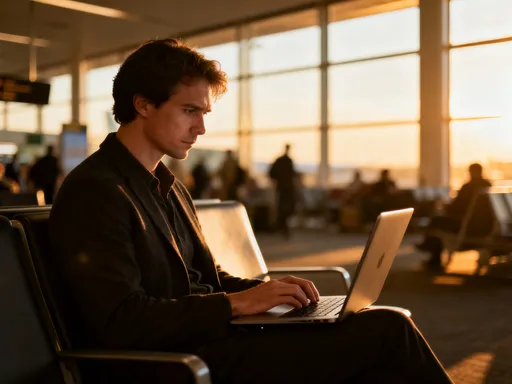
That’s when I adopted the “offline-first” mindset. Instead of assuming I’ll always be connected, I plan as if I won’t be. Before any trip, I sync all my documents, download my calendar, and save key emails locally. I use apps that store data on my device first, then sync when I’m back online. This small shift changed everything. Now, when I’m on a six-hour flight over the Atlantic, I’m not idle. I’m drafting articles, reviewing contracts, or brainstorming ideas in my notes app—all without a single bar of signal. And when I land? Everything uploads automatically. It feels like magic, but it’s just smart design.
Another trick? Voice memos. If inspiration strikes during a hike in the Swiss Alps or a quiet moment in a Tokyo train station, I speak my thoughts into my phone. Later, when I’m back in a café with Wi-Fi, I transcribe them with a tap. This practice has saved countless ideas that would’ve otherwise slipped away. The offline-first approach isn’t about rejecting connectivity—it’s about not letting its absence stop you. It’s about building a workflow that’s resilient, flexible, and ready for real life. And honestly, it’s made me more confident, more creative, and less anxious about the unknown. Because now, I know I can keep going—even when the world goes quiet.
Protecting Your Mental Space in Shared Physical Spaces
Let’s talk about something most remote work guides skip: noise. Not digital noise, but the real kind—the clatter of dishes in a hostel kitchen, the chatter of travelers in a shared lounge, the hum of a crowded café. I used to think I could power through it, that if I just focused harder, I could block it out. But the truth is, constant background noise is exhausting. It wears down your concentration, your mood, even your sense of self. I’d finish a day of “work” feeling drained, unfocused, and strangely lonely—even in a room full of people.
That’s when I discovered the power of sound. Not just noise-canceling headphones—though those help—but smart sound tools that let me create a personal bubble wherever I am. There are apps that play gentle ambient noise—like rain, ocean waves, or a crackling fireplace—that mask distractions without shutting out the world completely. I don’t use them to escape. I use them to choose what enters my space. When I put on my headphones and play a soft forest soundscape, it’s like drawing a curtain around my mind. I can still hear if someone calls my name, but the background chaos fades into the distance.
One evening in Chiang Mai, I was trying to finish a presentation in a busy co-working space. The air conditioning was loud, someone was on a loud phone call, and my brain felt like it was short-circuiting. I put on my headphones, played a “focus forest” track, and within minutes, I was back in flow. It wasn’t the content of my work that changed—it was my environment. These tools don’t make me antisocial. They help me be more present. Because when I’m not fighting to concentrate, I have more energy for deep thinking, for creativity, for being fully here. And that’s a gift—not just to my work, but to myself.
The Apps That Help Me Feel Grounded, Not Just Productive
We talk a lot about productivity—getting more done, working faster, optimizing every minute. But what about feeling like yourself? What about staying connected to your mood, your values, your sense of purpose—especially when your location changes every week? I used to measure success by how many tasks I checked off. But over time, I realized that wasn’t enough. I could be “productive” and still feel lost, disconnected, or emotionally drained. That’s when I started using tools that weren’t about output—but about presence.
One of my simplest, most powerful habits? Daily journaling in a secure, private app. Every morning, before I check email or social media, I write three things: how I’m feeling, one thing I’m grateful for, and one intention for the day. It takes five minutes. But it centers me. It reminds me that I’m not just a worker—I’m a person with emotions, dreams, and a life beyond the screen. When I’m in a new city, that practice keeps me from feeling unmoored. It’s like an anchor.
I also use a gentle habit tracker—not the kind that shames you for missing a day, but one that celebrates small wins. Drinking enough water. Taking a walk. Calling a friend. These aren’t “tasks” in the traditional sense, but they’re essential to my well-being. The app sends kind, encouraging reminders—like a friend checking in. And when I log a habit, it doesn’t just check a box. It says, “You’ve got this.” Over time, these small digital nudges have helped me build routines that support my mental and physical health, no matter where I am. Because true productivity isn’t just about what you do. It’s about how you feel while doing it.
Building a Toolkit That Travels With You—And Grows With You
Looking back, my journey with remote work tools hasn’t been about chasing the latest app or the fastest laptop. It’s been about learning what I truly need. My setup today isn’t flashy. It’s thoughtful. It’s not a collection of standalone tools—it’s a system that works together, quietly supporting my life. The apps I use don’t compete for my attention. They collaborate. My notes sync to my calendar. My calendar respects my energy. My journal grounds me. It’s not perfect, but it’s mine. And it’s evolved with me—through jet lag, family crises, creative breakthroughs, and quiet moments of joy.
What I’ve learned is that the right technology doesn’t just help you work from anywhere. It helps you live more fully—wherever you are. It gives you space to breathe, to think, to connect. It doesn’t replace human moments; it protects them. When I can send that file from a mountain cabin without stress, I’m not just being productive. I’m showing up for my team, my family, and myself. And that’s the real measure of success.
So if you’re feeling overwhelmed by the idea of working on the go, I want you to know this: you don’t need to do it all. You don’t need every app or the fastest internet. You just need a few tools that understand your life. Start small. Pick one thing that’s draining your energy—a cluttered calendar, a noisy workspace, a disconnected routine—and find a simple, kind solution. Let technology serve you, not the other way around. Because when your tools work with you, not against you, you’re not just surviving the journey. You’re enjoying it. And that, my friend, is the kind of freedom worth traveling for.