I thought I was saving money—this app showed I was lying to myself
Ever looked at your bank statement and thought, “Where did it all go?” You’re not alone. I used to believe I was careful with money—until I tried an app that tracked my spending habits. What it revealed shocked me: small daily choices were quietly draining my wallet. This isn’t about budgets or shame. It’s about clarity. In the next few minutes, you’ll discover how simple tech tools can quietly transform your relationship with money—no willpower required. And the best part? You don’t need to be tech-savvy, rich, or perfect. You just need to be curious.
The Moment I Realized I Was Fooling Myself
I remember the exact Sunday afternoon I opened the app for the first time. My kids were napping, the house was quiet, and I had finally carved out ten minutes just for me. I’d downloaded this spending tracker on a whim after hearing a friend mention it during our weekly coffee chat. “It’s not about cutting back,” she said. “It’s about seeing what’s really happening.” I didn’t think I needed it. I paid my bills on time. I had a savings account. I wasn’t racking up credit card debt. I told myself I was doing fine.
But then the app loaded.
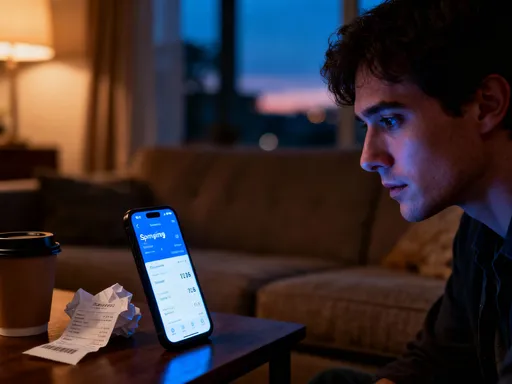
There it was—a clean, color-coded chart showing exactly where my money had gone over the last month. And one category glowed red: “Dining & Coffee.” $287. I stared at the number. That couldn’t be right. I only stopped for coffee a few times a week, right? And the lunches—those were quick, cheap things. Sandwiches. A salad here and there. Nothing fancy. But the app didn’t lie. It showed every transaction: Monday, 8:17 a.m., local café, $4.50. Wednesday, 12:32 p.m., drive-thru salad, $12.80. Friday, dinner with a friend, $36. And that was just one week. Multiply that by four, and suddenly, $287 made sense.
That moment wasn’t about guilt. It was about awareness. I wasn’t a bad person. I wasn’t irresponsible. I was just unaware. And that lack of awareness was costing me—quietly, steadily, without me even noticing. The app didn’t judge me. It didn’t shame me. It simply showed me the truth. And in that stillness, with the house quiet and my children sleeping, something shifted. I realized I hadn’t been lying to the world—I’d been lying to myself.
Why We Lie to Ourselves About Spending (And How Tech Tells the Truth)
We all do it. We tell ourselves the little things don’t matter. “It’s just a dollar,” we say when we tap our card at the vending machine. “It’s only once in a while,” we whisper when we buy a new candle or impulse order online. But here’s the thing: our brains aren’t built to track small, repeated actions. We remember big purchases—the new shoes, the birthday gift, the family vacation. But the daily drip of spending? That slips right through the cracks.
Psychologists call this mental accounting—the way we categorize and justify money in our heads. We create invisible rules: “This is for fun,” “That’s an exception,” “I deserve this.” And over time, those exceptions become the norm. We stop seeing the pattern because we’re too close to it. It’s like standing in a fog—we know something’s there, but we can’t make out the shape.
That’s where technology steps in—not as a critic, but as a mirror. A good spending app doesn’t tell you what to do. It doesn’t scold you for buying coffee. Instead, it quietly collects your data and shows you the full picture. It says, “Hey, you spent $120 this month on snacks and drinks at work. Did you know that?” It’s not about blame. It’s about clarity.
Most of these tools work automatically. You link your bank account or credit card, and the app starts tracking every purchase. It categorizes your spending—groceries, transportation, entertainment—using smart algorithms. Some even learn your habits over time. Then, once a week, it sends you a simple summary: “You spent 20% more on eating out this week.” Or, “Your subscription total is now $47/month.” No drama. No guilt. Just facts.
And here’s the magic: once you see it, you can’t unsee it. That awareness creates space for choice. You’re not suddenly forced to stop buying coffee. But now, you can decide—consciously—whether that $4.50 is worth it to you. That’s the power of tech: it doesn’t control you. It empowers you.
Choosing the Right Tool Without Feeling Overwhelmed
When I first started looking for an app, I felt overwhelmed. There were so many options—some with complex dashboards, others with flashy features I didn’t understand. One promised “AI-powered financial freedom,” whatever that meant. Another looked like it was designed for stock traders, not someone who just wanted to understand her grocery bill.
I almost gave up. But then I reminded myself: this wasn’t about becoming a financial expert. It was about getting a clearer picture of my life. So I shifted my focus. Instead of looking for the “best” app, I looked for the one that felt right for me.
Here’s what I learned: the best tool is the one you’ll actually use. For some people, that means a simple interface with big numbers and colors. For others, it’s an app that sends friendly reminders or allows shared access with a partner. The key is to match the tool to your lifestyle.
If you’re a busy mom like me, look for something that works in the background. Automatic tracking is essential—no one has time to log every coffee or parking fee. Choose an app that categorizes spending for you and sends a weekly email or notification. If you’re just starting out, avoid anything that feels like a report card. You don’t need red “FAIL” messages or pressure to save $10,000 by next month.
Instead, look for phrases like “Here’s where your money went” or “You’re on track with groceries.” Warm, neutral language makes a big difference. And don’t worry about advanced features like investment tracking or tax planning—those can come later. Start with the basics: visibility, simplicity, and kindness.
I ended up choosing an app that sends me a Sunday evening summary. It’s short—just three lines and a pie chart. It feels like a gentle check-in, not a test. And because it’s simple, I actually read it. Every. Single. Week.
Setting It Up in Less Than 10 Minutes (Step-by-Step)
I know what you’re thinking: “Tech setup? That sounds complicated.” I thought the same thing. But here’s the truth: most of these apps are designed for people who don’t love technology. You don’t need to be a coder or a finance nerd. You just need ten minutes and your phone.
Here’s exactly what I did—and what you can do too:
First, I opened the app store and searched for “spending tracker.” I picked one with good reviews and a clean design. Then I downloaded it and opened it up. The first screen said, “Welcome! Let’s connect your accounts.” I tapped “Get Started.”
Next, it asked me to log in to my bank. I typed in my username and password—just like I do when I check my balance online. The app used secure encryption (that’s a fancy way of saying it’s safe), and within seconds, my account was linked. No paperwork. No phone calls. Just one login.
Then, the app started pulling in my transactions. I watched as the last 30 days of spending appeared on the screen—every grocery run, every online order, every coffee stop. It was a little surreal, seeing it all in one place.
After that, I spent two minutes naming my categories. The app had guessed most of them: “Groceries,” “Gas,” “Dining Out.” But it had labeled my yoga class as “Entertainment.” I tapped it and changed it to “Wellness.” That’s the only manual step I do—and only when something’s mislabeled.
Finally, I turned on notifications. I chose to get a weekly summary every Sunday at 7 p.m. That way, it fits into my quiet time before the week begins.
And that was it. Ten minutes. No tech support. No frustration. The app started working immediately, tracking everything in the background. The only thing I had to do was look at it. And honestly? That was the hardest part—not the setup, but facing what I saw.
One mistake I made? I linked my credit card but forgot my checking account. For two weeks, the app only showed half my spending. I felt confused—why was my “dining out” number so low? Then I realized: my takeout orders were paid from checking, not credit. Once I linked both accounts, the full picture emerged. So my tip: connect all your accounts. Even the one you use for “little things.”
What to Do When the Numbers Surprise You
Let’s be real: that first report can be a shock. I felt my chest tighten when I saw the $287. My mind raced: “Am I failing? Should I never buy coffee again? Is this why I can’t save for my daughter’s camp?”
But then I remembered what my friend said: “It’s not about cutting. It’s about understanding.” So instead of reacting, I paused. I took a breath. And I asked myself a simple question: “What need was I meeting when I made these purchases?”
Because spending is never just about money. It’s about feeling. That coffee wasn’t just caffeine. It was a quiet moment before the day began. It was warmth in my hands. It was five minutes of peace. The lunches weren’t just food—they were convenience on a busy day. No cooking. No cleanup. Just a break.
Once I saw that, I didn’t feel guilty. I felt compassionate. I wasn’t wasting money. I was trying to care for myself in the only way I knew how.
So I didn’t ban coffee. Instead, I found a way to keep the peace without the price tag. I started making a thermos at home. Same quiet moment. Same warmth. But now, I save $150 a month. And that money goes into a separate savings goal—my “peace fund.” I use it for things that truly recharge me: a massage, a weekend book, a quiet afternoon at a botanical garden.
The key is not elimination—it’s alignment. When your spending matches your values, it feels good. When it doesn’t, it feels draining. Technology helps you see the gap. But only you can decide how to close it—with kindness, not punishment.
How Clearer Communication with Money Transforms Life at Home
Money isn’t just personal. It’s relational. Even if you don’t talk about it, it affects your home. I didn’t realize how much tension I carried until I started using the app. I’d snap at my partner over small things—why did he buy that tool? Why did we go out again? But the truth was, I was stressed. I didn’t know where our money was going. And that uncertainty made me anxious.
Once I had data, everything changed. I sat down with my husband and showed him the app. Not to blame. Not to compare. Just to share. “Look,” I said. “I didn’t know I was spending this much on coffee. I want to adjust. What about you?”
That simple conversation opened a door. He admitted he hadn’t realized how much he spent on work lunches. We weren’t hiding. We weren’t judging. We were just seeing.
We started using the app together. We set up a shared view—just the big categories, nothing too detailed. Every Sunday, we’d spend five minutes reviewing the week. “We’re a little high on groceries—maybe because of the holiday?” “Your wellness spending is up—glad you’re taking care of yourself.” No arguments. No defensiveness. Just curiosity.
And slowly, the energy in our home shifted. Money stopped being a silent stressor. It became a tool for teamwork. We started planning for things we both cared about—our son’s music lessons, a family trip, home repairs. We weren’t guessing anymore. We were deciding—together.
That’s the real gift of these tools: they don’t just track money. They improve communication. They create space for honesty, trust, and shared dreams.
Building a Calmer, Smarter Future—One Insight at a Time
This journey isn’t about becoming rich. It’s about becoming clear. Over time, small insights add up. I realized I didn’t miss the daily coffee runs. I discovered I had an extra $200 a month I didn’t know about. I started saving for my daughter’s camp—without feeling deprived.
But more than the money, I gained something deeper: confidence. I’m no longer afraid to look at my bank account. I’m not surprised by my spending. I feel in control—not because I’m perfect, but because I’m aware.
And that awareness ripples into every part of my life. I make better decisions. I plan with calm, not panic. I invest in what matters—my family, my health, my peace.
The technology fades into the background. I don’t think about the app every day. But it’s there—quietly working, gently reminding me of what’s true. It’s like having a wise friend who says, “Hey, just so you know…” without judgment.
If you’ve ever looked at your bank statement and wondered where the money went, I get it. You’re not careless. You’re not bad with money. You’re just human. And sometimes, all we need is a little help seeing ourselves clearly.
So here’s my invitation: try it. Give yourself ten minutes. Download an app. Link your account. Look at the numbers—not to fix yourself, but to know yourself.
Because when you see your spending clearly, you don’t just save money. You reclaim your attention. Your choices. Your future. And that? That’s worth every penny.