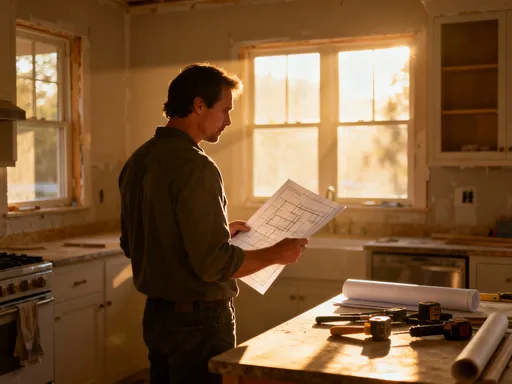
Why Timing Is Everything When Renovating Your Home
You’ve probably heard that timing can make or break an investment—and when it comes to home renovation, that couldn’t be truer. I’ve seen homeowners pour money into upgrades only to miss the optimal window for returns. Whether it’s market trends, seasonal costs, or personal financial readiness, getting the timing wrong can cost you more than just cash. So how do you know when to start that kitchen remodel or bathroom refresh? Let’s break down the real factors that define smart renovation timing. It’s not just about choosing the right tile or countertop; it’s about aligning your project with broader economic patterns, seasonal rhythms, and personal financial stability. When done right, a renovation can significantly boost your home’s value and your long-term financial well-being. But when mistimed, it can drain savings, delay equity growth, and even reduce resale appeal. The key lies in understanding the interconnected web of timing variables that determine whether your renovation becomes a wise investment or a costly misstep.
The High Cost of Bad Timing
Home renovation is often viewed as a straightforward path to increasing property value, but the reality is far more nuanced. The timing of when you begin a project can dramatically influence its financial outcome. Many homeowners, eager to improve their living space, jump into renovations without considering the broader financial implications. Starting a project during peak construction seasons—typically spring and summer—can lead to inflated labor rates and higher material costs due to increased demand. Contractors may charge 10% to 20% more during these months, and material shortages can delay timelines, further increasing expenses. These seasonal surges are not just minor fluctuations; they represent real financial pressure that can stretch budgets beyond their limits.
Equally important is the alignment of renovation timing with the broader real estate market. Initiating a major remodel just before a market downturn can leave homeowners in a difficult position. If home values stagnate or decline, the expected return on investment may not materialize, making it harder to recoup renovation costs upon sale. Conversely, completing a renovation during a rising market can amplify gains, especially if the upgrades align with buyer preferences in a competitive environment. For example, adding energy-efficient features or modern bathrooms just before listing can significantly boost appraisal values and attract higher offers. The financial ripple effects of poor timing are not limited to lost returns—they can also impact borrowing capacity, insurance premiums, and even tax assessments.
Personal financial readiness plays a crucial role as well. Even if market conditions are favorable, launching a renovation during a period of financial instability can create unnecessary stress. Homeowners who finance projects through credit cards or high-interest loans may find themselves burdened with long-term debt, especially if unexpected repairs arise. Emergency expenses, job instability, or changes in family income can all disrupt a renovation timeline and inflate costs. Therefore, assessing one’s financial health before beginning any project is essential. This includes evaluating savings, debt levels, and access to low-cost financing options. A renovation should enhance financial security, not compromise it, and timing the project to coincide with personal stability is a critical step toward achieving that goal.
Reading the Market: When Property Trends Matter
Real estate markets move in cycles, and understanding where your local market stands can be the difference between a profitable renovation and a financial setback. Renovating during an upswing—when demand for homes is rising and inventory is low—can position your property to capture maximum value. Buyers in competitive markets are often willing to pay a premium for updated homes, especially those with modern kitchens, energy-efficient systems, and move-in-ready appeal. By aligning your renovation with these favorable conditions, you increase the likelihood of a strong return on investment when you eventually sell.
On the other hand, launching a major renovation during a market slowdown can lead to over-improvement without adequate compensation. If neighboring homes are selling at lower prices due to economic downturns or rising interest rates, investing heavily in high-end finishes may not translate into higher resale value. In such cases, homeowners risk spending thousands on upgrades that do not align with neighborhood norms, making it difficult to justify the cost to potential buyers. This is particularly true in areas where home values are stagnant or declining. Therefore, it’s essential to study local market data before committing to a renovation plan.
To make informed decisions, homeowners should track key indicators such as median home prices, days on market, and absorption rates in their area. Publicly available real estate reports, neighborhood price trends, and comparative market analyses (comps) can provide valuable insights. For instance, if recent sales show that updated bathrooms consistently command a 5% to 10% premium, it may be a smart time to invest in that specific upgrade. Similarly, if new developments are increasing supply and slowing price growth, it might be better to delay major renovations until demand rebounds. Real estate agents, appraisers, and local housing authorities often publish forecasts that can help homeowners anticipate market shifts and plan accordingly.
Interest rates also play a significant role in buyer behavior and, by extension, renovation strategy. When mortgage rates are low, more buyers enter the market, increasing competition and driving up home prices. This environment is ideal for selling a renovated home. Conversely, when rates rise, buyer demand may cool, reducing the urgency to upgrade. Monitoring these macroeconomic factors allows homeowners to time their renovations to coincide with periods of high buyer activity and stronger pricing power. The goal is not to predict the market perfectly, but to make data-informed decisions that align with observable trends and regional dynamics.
Seasonal Shifts: The Hidden Cost Factor
While market trends influence long-term returns, seasonal patterns directly impact short-term costs and project feasibility. The time of year you choose to renovate can affect everything from contractor availability to material pricing. Spring and summer are the most popular seasons for home improvement, leading to high demand for labor and materials. As a result, contractors often raise their rates, and scheduling can become a challenge, with wait times extending several weeks or even months. This peak-season premium means that identical projects can cost significantly more if started in May versus November.
Winter, by contrast, offers a window of opportunity for cost-conscious homeowners. With lower demand, many contractors offer discounted rates to stay busy during slower months. This can translate into savings of 10% to 15% on labor alone. Additionally, off-season scheduling often means faster project starts and more flexibility in design changes. However, winter renovations come with their own set of challenges, particularly for exterior work. Cold temperatures, snow, and ice can delay deliveries, affect material performance, and increase the risk of weather-related disruptions. Interior projects, such as kitchen or bathroom remodels, are less affected and can benefit greatly from off-peak advantages.
Material costs also follow seasonal trends. Lumber, one of the most widely used building materials, tends to be more expensive in spring and summer due to increased construction activity across the country. Prices can fluctuate by as much as 20% between seasons, depending on supply chain conditions and regional demand. Other materials, such as roofing shingles, windows, and flooring, may also see price variations based on availability and shipping schedules. By planning purchases during off-peak months, homeowners can lock in lower prices and reduce overall project costs. Some contractors even offer early-bird discounts for clients who commit to winter contracts, allowing them to secure materials at lower rates and pass the savings on to the homeowner.
Smart timing also considers project duration and lifestyle impact. Renovations often require temporary disruptions, such as restricted access to kitchens or bathrooms, noise, and dust. Scheduling major work during school breaks or vacation periods can minimize stress, especially for families. For those planning to sell, completing renovations in late winter or early spring positions the home perfectly for the peak selling season, when buyer activity is highest. This strategic alignment of timing, cost, and market readiness maximizes both financial efficiency and resale potential. By understanding and leveraging seasonal shifts, homeowners can achieve better outcomes without sacrificing quality or convenience.
Personal Finance Readiness: The Overlooked Trigger
Even the most favorable market and seasonal conditions mean little if your personal finances are not in order. A renovation, no matter how well-timed, can become a financial burden if undertaken without proper preparation. The most successful projects are those that align not only with external conditions but also with the homeowner’s internal financial health. Before breaking ground, it’s essential to evaluate key financial indicators such as emergency savings, debt levels, income stability, and creditworthiness. These factors determine your ability to absorb unexpected costs, qualify for favorable financing, and maintain financial flexibility throughout the project.
One of the most important safeguards is having a fully funded emergency reserve. Renovations often uncover hidden issues—such as outdated wiring, plumbing problems, or structural damage—that can add thousands to the budget. Without a cushion, homeowners may be forced to take on high-interest debt or delay other financial goals. Financial advisors generally recommend having at least three to six months of living expenses saved before undertaking a major renovation. This reserve acts as a financial shock absorber, ensuring that surprises don’t derail the project or compromise overall stability.
Debt levels and credit score also influence renovation feasibility. Homeowners with high credit utilization or poor credit history may face higher interest rates on loans or home equity lines of credit (HELOCs), increasing the long-term cost of financing. Improving credit before applying for renovation funding can lead to significant savings. Additionally, lenders assess debt-to-income ratios when approving loans, so reducing existing debt or increasing income can improve eligibility. For those considering cash-out refinancing, timing the refinance to coincide with low mortgage rates can reduce monthly payments and free up capital for improvements.
Liquidity is another critical factor. While home equity represents a significant asset, it is not immediately accessible. Converting equity into cash requires time and often comes with fees and closing costs. Homeowners should plan well in advance, allowing for processing time and documentation. Those relying on personal savings should ensure that funds are readily available and not tied up in long-term investments. The goal is to avoid cash flow shortages that could delay the project or lead to rushed, suboptimal decisions. By aligning renovation timing with personal financial milestones—such as a bonus, tax refund, or debt payoff—homeowners can enhance their ability to fund the project efficiently and with minimal stress.
Project Scope and Phasing: Timing Through Stages
Not all renovations need to be completed in one go. In fact, breaking a large project into phases can be a smarter financial strategy. Phased renovations allow homeowners to spread costs over time, reduce financial pressure, and adapt to changing market or personal circumstances. For example, starting with a kitchen remodel—often one of the highest-return upgrades—can provide immediate benefits in terms of livability and resale appeal. Once that project is complete and its impact assessed, homeowners can decide whether to proceed with a basement finish, outdoor living space, or energy-efficient upgrades.
Phasing also enables better budget control. Instead of committing to a $50,000 project all at once, homeowners can allocate $15,000 per year over three years, allowing savings to accumulate between phases. This approach reduces reliance on debt and minimizes the risk of cost overruns. It also provides time to research materials, compare contractors, and refine design choices based on real-world experience. For instance, after living with new countertops or cabinetry, a homeowner might decide to change the color scheme or layout for the next phase, leading to a more cohesive and satisfying final result.
Prioritizing high-return improvements is another key benefit of phasing. According to national remodeling cost vs. value reports, certain upgrades consistently deliver stronger returns. Bathroom renovations, garage door replacements, and manufactured stone veneer installations often recoup 70% to 80% of their cost at resale. Energy-efficient windows and insulation not only add value but also reduce utility bills, offering long-term financial benefits. By focusing on these high-impact areas first, homeowners can maximize early returns while preserving the option to tackle lower-ROI projects later.
Phasing also allows for strategic timing. A homeowner might complete an interior renovation in winter when labor is cheaper, then schedule outdoor work in spring when weather permits. This flexibility ensures that each phase takes advantage of optimal conditions, whether financial, seasonal, or logistical. Additionally, phased projects can be paused or adjusted if market conditions change—for example, if a planned sale is delayed or interest rates rise. This adaptability makes phased renovations a more resilient and financially sound approach, especially in uncertain economic environments.
Risk Control: Avoiding Over-Improvement and Cost Creep
One of the most common pitfalls in home renovation is over-improvement—the act of spending more on upgrades than the local market will support. A luxury kitchen with imported appliances and custom cabinetry may be beautiful, but if neighboring homes are modestly priced, the investment may not pay off at resale. Buyers typically compare homes within a price range, and an over-improved property can stand out for the wrong reasons: it may appear out of place or overpriced. To avoid this, homeowners should research comparable properties in their area and ensure that upgrades align with neighborhood standards.
Cost creep is another significant risk. Even well-planned projects can exceed budgets due to unforeseen changes, material price increases, or design upgrades. A simple switch from laminate to quartz countertops, for example, can add thousands to the total. To manage this, it’s essential to establish a realistic budget with a contingency fund—typically 10% to 15% of the total project cost. This buffer absorbs unexpected expenses without derailing the project. Regular monitoring of spending, clear contracts with contractors, and approval processes for change orders can also help maintain financial control.
Data-driven decision-making is crucial in risk management. Resources such as the annual Cost vs. Value Report provide reliable estimates of how much various renovations recoup at resale. Using this information, homeowners can prioritize projects with proven returns and avoid those with low payback. For instance, adding a home office may have high personal utility, but its resale value varies by location and market demand. In contrast, minor kitchen remodels and mid-range bathroom updates consistently rank among the top performers. By grounding expectations in real data, homeowners can make informed choices that balance personal preferences with financial prudence.
Additionally, working with experienced professionals who provide detailed estimates and transparent pricing can reduce the risk of surprises. Avoiding the temptation to “just one more thing” during construction helps maintain focus and budget discipline. The goal is not to eliminate all risk—renovations inherently involve some uncertainty—but to manage it through planning, research, and disciplined execution. When risk is controlled, the renovation becomes a more predictable and rewarding investment.
The Smart Path Forward: Aligning All the Pieces
Successful renovation timing is not about waiting for a single perfect moment. It’s about creating alignment among multiple factors—market conditions, personal finances, seasonal advantages, and project scope. When these elements converge, the financial outcome becomes more predictable and secure. A homeowner who renovates during a rising market, takes advantage of off-season contractor rates, phases the project to match budget cycles, and prioritizes high-ROI improvements is far more likely to achieve a strong return than one who acts impulsively.
The path forward begins with assessment. Evaluate your local real estate trends: is demand rising or falling? Are homes selling quickly or sitting on the market? Next, review your personal finances: do you have savings, stable income, and manageable debt? Then, consider the season: can you save money by starting in winter, or does timing the sale for spring make more sense? Finally, define your project scope: which improvements offer the best value, and can they be phased to reduce financial strain?
By answering these questions systematically, homeowners can develop a clear, evidence-based renovation strategy. This approach transforms renovation from a reactive expense into a proactive investment. It empowers homeowners to act with confidence, knowing that their decisions are grounded in data, financial readiness, and strategic timing. The ultimate goal is not just to improve a home, but to enhance long-term financial well-being. With the right timing, a renovation can be more than a lifestyle upgrade—it can be a smart, sustainable step toward greater wealth and security.