How I Time the Market Without Losing Sleep – A Real Risk-Hedging Journey
Investing used to keep me up at night—watching charts, fearing crashes, jumping in too late or out too early. I’ve been burned before, chasing highs and missing warnings. But over time, I discovered timing isn’t about perfection—it’s about protection. This is how I shifted from panic-driven moves to a smarter, risk-aware approach that balances opportunity and safety. No hype, just real lessons from someone who’s been in the trenches. What changed wasn’t my portfolio size or access to insider information—it was my mindset. I stopped trying to outsmart the market and started building systems that let me sleep soundly, even when volatility spikes. This journey wasn’t quick or easy, but it was necessary. And if you’ve ever felt anxious about your investments, you’re not alone. The truth is, most people don’t fail because they pick the wrong stocks—they fail because they time their moves wrong. What follows is a practical guide to timing the market with discipline, not desperation.
The Moment I Realized Timing Wasn’t About Winning—It Was About Surviving
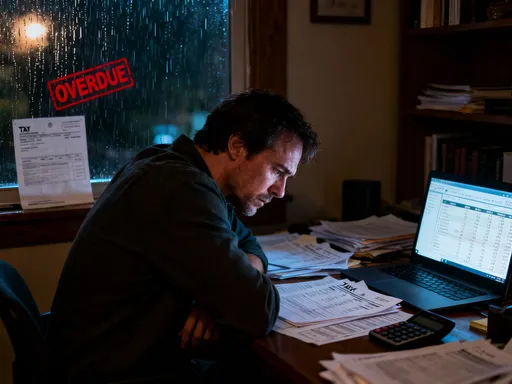
Back in 2008, I had what I thought was a solid portfolio. I’d invested in a few well-known companies, diversified across sectors, and felt confident about long-term growth. I wasn’t an aggressive trader, but I wasn’t passive either. When the market started to dip in early 2008, I told myself it was a correction—just a blip. I held on, believing the recovery would come quickly. But as the months passed and losses deepened, fear crept in. By the time I sold, I’d lost nearly 40% of my portfolio’s value. I didn’t sell at the bottom, but I came close. That experience didn’t just cost me money—it shook my confidence.
What I didn’t realize then was that the real mistake wasn’t holding too long. It was the lack of a plan for when to act. I had no exit strategy, no thresholds for cutting losses, and no way to measure when the risk had become too high. I was reacting, not responding. That loss taught me a fundamental truth: in investing, survival comes before success. You can’t compound wealth if you’re wiped out early. The market doesn’t reward the smartest investor—it rewards the one who stays in the game longest. From that point on, I stopped chasing returns and started focusing on risk management. I began asking different questions: How much can I afford to lose? When should I reduce exposure? What early signs signal trouble? These weren’t about predicting the future—they were about preparing for uncertainty.
The emotional toll of that experience was just as damaging as the financial hit. For months, I second-guessed every decision. I avoided checking my account. I even considered pulling out of the market entirely. But I knew that wasn’t the answer. The solution wasn’t to avoid risk—it was to manage it. I started reading about risk hedging, portfolio protection, and behavioral finance. I learned that even professional investors don’t time the market perfectly. What separates them from amateurs is their ability to limit losses. That shift—from chasing wins to preventing disasters—changed everything. It wasn’t about becoming fearless. It was about building a system that didn’t depend on courage, but on rules.
Why Risk Hedging Changes the Game in Investment Timing
Risk hedging is often misunderstood as a complex tool for hedge funds and institutional traders. In reality, it’s simply a way to reduce potential losses without giving up upside. For individual investors, it’s not about derivatives or short-selling—it’s about strategies that cushion your portfolio when markets turn. The goal isn’t to eliminate risk, which is impossible, but to make it manageable. When done right, hedging transforms timing from a guessing game into a structured process. Instead of trying to predict when a crash will happen, you prepare for the possibility that it might.
One of the most effective hedging tools is asset allocation. By dividing your portfolio across different types of investments—stocks, bonds, real estate, cash—you reduce dependence on any single market. For example, when equities fall, bonds often hold steady or even rise. This doesn’t guarantee profits, but it prevents your entire portfolio from collapsing at once. Another approach is using defensive sectors like utilities or consumer staples, which tend to be more stable during downturns. These aren’t high-growth plays, but they provide ballast when the market is turbulent.
I also use stop-loss orders as a form of mechanical hedging. When I buy a stock, I set a price point—usually 10% to 15% below my entry—at which I’ll automatically sell. This removes emotion from the decision. If the stock drops due to bad news or market panic, I’m not stuck wondering whether to cut losses. The rule does it for me. Some investors argue that stop-losses can trigger during temporary dips, but I’ve found that the psychological benefit outweighs the risk. Knowing I have a defined exit point reduces anxiety and prevents catastrophic losses.
Another strategy I’ve adopted is partial hedging through inverse ETFs during periods of high uncertainty. These funds move in the opposite direction of major indices, so they gain value when the market falls. I don’t hold them long-term—they’re tactical tools used sparingly, like insurance. For instance, in late 2018, when interest rate hikes and trade tensions created volatility, I allocated a small portion of my portfolio to an inverse S&P 500 ETF. When the market dropped nearly 20% in December, that position helped offset losses elsewhere. It wasn’t a huge gain, but it kept my overall portfolio from spiraling. The key is moderation—hedging should protect, not dominate your strategy.
The Three Signals I Watch Before Making Any Move
Over the years, I’ve learned that reacting to headlines or short-term price swings leads to poor timing. Instead, I rely on three non-emotional signals that help me anticipate shifts before they become obvious. These aren’t foolproof, but they provide a disciplined framework for decision-making. The first is market sentiment. When fear or greed reaches extremes, it often signals a turning point. I track sentiment through indicators like the CNN Fear & Greed Index and investor surveys. When 90% of investors are bullish, I get cautious. When pessimism is widespread, I look for opportunities. Sentiment doesn’t tell you when a reversal will happen, but it highlights when the crowd may be overreacting.
The second signal is valuation. I pay close attention to price-to-earnings (P/E) ratios, especially for broad market indices like the S&P 500. Historically, when the P/E ratio exceeds 25, future returns tend to be lower over the next decade. That doesn’t mean the market will crash tomorrow, but it suggests that risk is higher and potential rewards are smaller. In 2021, when the S&P 500’s P/E ratio climbed above 30, I began reducing my equity exposure and increasing cash holdings. I didn’t sell everything, but I scaled back. That decision helped me avoid some of the 2022 downturn. Valuation isn’t a timing tool on its own—it’s a warning sign that tells you to be more cautious.
The third signal is macroeconomic inflection points. These are major shifts in interest rates, inflation, or employment trends that can change the market’s direction. For example, when the Federal Reserve begins raising rates after a long period of low rates, it often marks the end of a bull market. I don’t try to predict Fed decisions, but I watch for clear policy changes. In 2022, when the Fed signaled aggressive rate hikes to combat inflation, I took that as a cue to reduce risk. I shifted more assets into short-term bonds and cash, which benefit from rising rates. I also avoided long-duration growth stocks, which tend to struggle in higher-rate environments. These signals don’t give exact entry or exit points, but they help me align my portfolio with the broader economic reality.
What makes these signals powerful is that they’re objective. They’re not based on gut feelings or news headlines. They’re measurable, repeatable, and grounded in historical patterns. By waiting for confirmation from at least two of these signals, I avoid overreacting to noise. For example, high valuations alone don’t trigger action—but high valuations combined with extreme bullish sentiment and rising interest rates do. This layered approach reduces false alarms and keeps me from making impulsive moves. It’s not about being right every time. It’s about being wrong less often.
Building a Buffer: How I Use Position Sizing to Stay Flexible
One of the biggest mistakes I made early on was going all-in on a single idea. I’d find a stock I liked, do some research, and invest a large chunk of my portfolio at once. If the stock went up, I felt brilliant. If it dropped, I panicked. What I didn’t realize was that my timing depended entirely on a single decision point. There was no room for error. Over time, I learned that position sizing—how much you invest at one time—is one of the most powerful tools for managing timing risk.
Now, I never invest more than 5% of my portfolio in a single stock, and I usually scale in gradually. For example, if I want to build a 5% position in a company, I might buy 2% initially, then add 1.5% after the stock shows strength, and the final 1.5% after it confirms a breakout. This approach does two things: it reduces the impact of bad timing, and it gives me time to assess whether my thesis is correct. If the stock drops after my first purchase, I haven’t committed too much. If it rises, I still participate in the gains.
This method also helps with emotional control. When you invest gradually, you’re less likely to feel pressure to be right immediately. You’re not betting everything on one moment. Instead, you’re testing the waters and adjusting as you go. I’ve found that this reduces the temptation to chase a rising stock or sell in a panic when it dips. It creates a sense of control, even in volatile markets. It’s like driving with both hands on the wheel—you’re ready to steer, not just react.
Scaling out works the same way. When I decide to sell, I rarely do it all at once. If a stock has run up significantly and valuation looks stretched, I might sell 30% to lock in some gains, then monitor the rest. If the trend continues, I can sell more later. If it reverses, I’ve already reduced exposure. This approach turns timing into a process, not a single event. It’s not about nailing the top or bottom—it’s about managing the range. Over time, this has led to better average entry and exit points, and more consistent results.
The Role of Diversification in Timing Protection
Most people think of diversification as a way to spread risk across different stocks or sectors. That’s true, but its real power lies in how it protects against timing errors. When your portfolio is diversified across uncorrelated assets—those that don’t move in lockstep—you reduce the impact of being wrong about any single market. For example, if you’re overweight in tech stocks and the sector corrects, your whole portfolio suffers. But if you also hold bonds, real estate, and international equities, the damage is contained.
I structure my portfolio to include assets with different return drivers. U.S. stocks provide growth, international stocks offer geographic diversification, bonds add stability, real estate investment trusts (REITs) provide income and inflation protection, and cash ensures liquidity. Each asset class behaves differently under various economic conditions. When inflation rises, for instance, commodities and TIPS (Treasury Inflation-Protected Securities) tend to outperform. When growth slows, bonds often rally. By holding a mix, I don’t need to perfectly time any one market—my portfolio is positioned to handle multiple scenarios.
Diversification also helps with emotional discipline. When one part of my portfolio is struggling, another may be doing well. This prevents me from making drastic changes based on short-term pain. For example, during the 2020 market crash, my stock holdings dropped, but my bond funds held steady and even gained slightly. That balance kept me from selling stocks at a loss. I was able to stay the course because I knew my overall risk was managed. Diversification isn’t a guarantee against losses, but it smooths the ride, which makes it easier to stick to a long-term plan.
Another benefit is that different assets peak at different times. The stock market might be near all-time highs, but international markets or small-cap stocks could be lagging. This creates opportunities to rebalance—selling high and buying low within the same portfolio. Rebalancing forces me to take profits from overvalued areas and redeploy them into undervalued ones. It’s a form of automatic timing correction. Studies have shown that regular rebalancing can improve long-term returns while reducing volatility. For me, it’s not just a mechanical task—it’s a way to stay disciplined and avoid emotional drift.
When to Hold Back: The Power of Cash as a Tactical Tool
Many investors see cash as dead money—a drag on returns that earns little and loses to inflation. I used to think that way too. But over time, I’ve come to view cash as one of the most strategic assets in my portfolio. Holding cash isn’t inaction—it’s optionality. It gives me the freedom to act when others are forced to sell. In volatile markets, liquidity is power. And having dry powder means I can take advantage of opportunities without selling at a loss.
I aim to keep between 5% and 15% of my portfolio in cash or cash equivalents, depending on market conditions. When valuations are high and risk signals are flashing, I lean toward the higher end. When markets are distressed and assets are on sale, I deploy more. For example, in March 2020, when the pandemic caused a sharp market drop, I used my cash reserves to buy high-quality stocks at discounted prices. That decision boosted my long-term returns significantly. But I could only do it because I hadn’t been fully invested.
Cash also serves as a psychological anchor. Knowing I have a cushion reduces the fear of missing out or the pressure to stay fully exposed. It allows me to wait for better setups without feeling like I’m falling behind. I’ve learned that some of the best moves in investing are the ones you don’t make. Staying in cash during uncertain times isn’t failure—it’s patience. And patience is a form of discipline. The market will always offer new chances. The real risk is jumping in at the wrong time and being forced to sell later under pressure.
Some investors worry that holding cash means underperforming in bull markets. That’s true—but only if you measure success in the short term. Over the long run, avoiding major losses has a bigger impact on wealth than chasing every gain. A 50% loss requires a 100% gain just to break even. By preserving capital through strategic cash holdings, I protect my ability to compound returns over time. Cash isn’t the enemy of growth—it’s the foundation of resilience.
Putting It All Together: My Real-World Timing Framework
My current approach to market timing is a blend of signals, position sizing, diversification, and cash management. It’s not a rigid formula, but a repeatable process that adapts to changing conditions. Here’s how it works in practice: First, I monitor the three signals—sentiment, valuation, and macroeconomic trends. When two or more indicate elevated risk, I begin reducing exposure. I don’t sell everything at once. Instead, I scale out of positions, taking profits from overvalued areas and increasing cash.
At the same time, I review my portfolio’s diversification. If one asset class has grown too large due to strong performance, I rebalance by selling a portion and reinvesting in underweight areas. This keeps my risk profile aligned with my goals. I also check my position sizes to ensure no single holding is too dominant. If a stock has appreciated significantly, I may trim it back to my target percentage, locking in gains while maintaining exposure.
During periods of high uncertainty, I increase my cash allocation and avoid making new aggressive bets. I might also add defensive assets like short-term bonds or dividend-paying stocks that provide income and stability. When the market corrects and valuations become more attractive, I start deploying cash gradually into high-quality opportunities. I don’t try to catch the bottom—I scale in as prices stabilize and signals improve.
A recent example was the 2022 market downturn. As inflation rose and the Fed began hiking rates, I saw multiple warning signs: elevated P/E ratios, extreme bullish sentiment lingering from 2021, and tightening monetary policy. I responded by reducing my equity exposure by 20%, increasing cash to 12%, and shifting some assets into short-term Treasuries. When the market dropped 20% over the year, my portfolio declined far less. Then, in late 2022 and early 2023, as valuations normalized and inflation showed signs of peaking, I began reinvesting. That disciplined approach allowed me to preserve capital and position for recovery—without panic or guesswork.
Timing Is a Habit, Not a Gamble
Looking back, the biggest shift in my investing journey wasn’t finding a better stock or a smarter strategy. It was learning to prioritize protection over performance. Great timing isn’t about predicting the future—it’s about preparing for it. It’s built on habits: watching signals, sizing positions wisely, diversifying across uncorrelated assets, and using cash as a strategic tool. These aren’t flashy tactics, but they’re reliable. They don’t guarantee riches, but they prevent ruin.
What I’ve learned is that consistency beats luck. You don’t need to be right all the time. You just need to avoid catastrophic mistakes. By focusing on risk hedging, I’ve stopped fearing market swings and started planning for them. I no longer lose sleep over daily fluctuations. I know I have a system that works over time. The goal isn’t to catch every top or bottom—it’s to stay aligned with my risk tolerance and long-term goals. In investing, survival isn’t passive. It’s the smartest move you can make. And for me, that’s the real definition of successful timing.